

Coconut Water Nutrition Facts: Everything You Need to Know
Coconut water contains approximately 18 calories, 45mg sodium, 250mg potassium and 4g natural sugars per 100ml. It is naturally fat-free, cholesterol-free and gluten-free. Young-green coconut water — the type we brew with at Coco Loco — has a higher electrolyte and mineral profile than mature coconut water. Per 330ml serve, that works out to roughly 60 calories and 13g naturally-occurring sugars, with about 600mg of potassium.
This guide breaks down exactly what's inside Australian coconut water — calories, carbohydrates, electrolytes, vitamins — plus how to read nutrition labels under Food Standards Australia New Zealand (FSANZ) rules, and how it compares to sports drinks, fruit juice and alcoholic coconut water.
Coconut water at a glance (per 100ml)
| Nutrient | Amount |
|---|---|
| Energy | ~18 kcal (75 kJ) |
| Total carbohydrates | ~4.5 g |
| Natural sugars | ~4 g |
| Protein | ~0.2 g |
| Total fat | 0 g |
| Potassium | 188–250 mg |
| Sodium | 24–45 mg |
| Magnesium | 25 mg |
| Calcium | 24 mg |
| Vitamin C | ~18 mg (30% RDI) |
Values vary by coconut maturity, origin and processing method (pasteurised vs UHT). Always check the nutrition information panel on the pack.
What is coconut water?
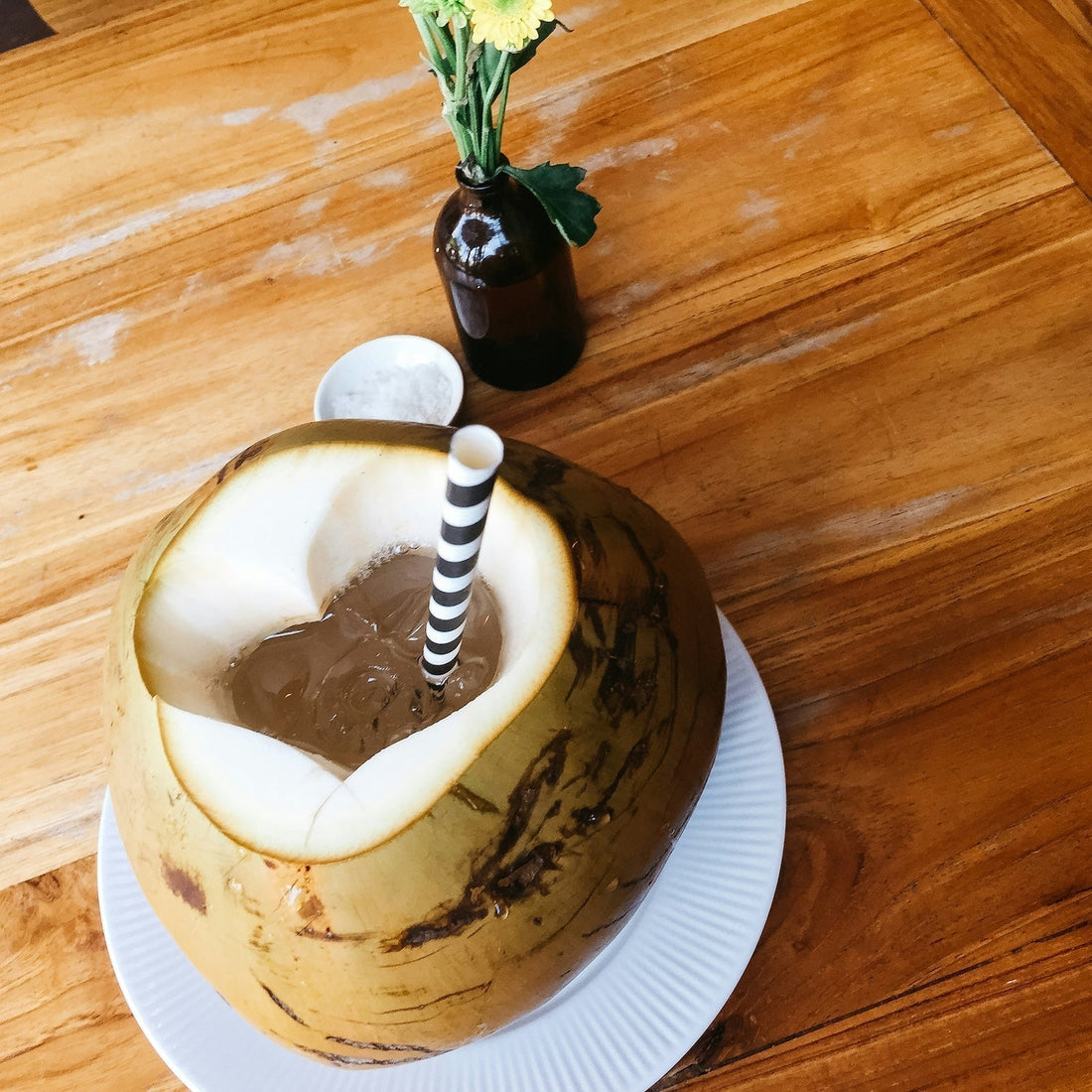
Coconut water is the clear, slightly sweet liquid inside young green coconuts (Cocos nucifera). In the first 6–7 months of the coconut's development, this liquid serves as the tree's built-in reservoir. At this young-green stage, the water is at its most plentiful and flavourful. Unlike coconut milk (made from grated mature coconut flesh) or coconut oil (pressed from the dried meat), coconut water is entirely the tree's own creation — low in fat, low in calories, rich in electrolytes.
Coconut water vs coconut milk vs coconut oil
- Coconut water — from young green coconuts. ~18 kcal/100ml, fat-free, electrolyte-rich.
- Coconut milk — grated mature flesh blended with water. ~200 kcal/100ml, high in saturated fat, culinary use.
- Coconut oil — cold-pressed from dried coconut meat (copra). ~862 kcal/100ml, 100% fat, cooking and cosmetic use.
Carbohydrates and sugars: what you need to know
Pure coconut water contains about 4.5g of carbohydrates per 100ml, of which around 4g are naturally-occurring sugars — mainly glucose and fructose. A 240ml cup provides roughly 10.8g carbs and 9.6g sugar. Because these sugars are intrinsic to the fruit, they carry along tiny amounts of vitamins and minerals.
FSANZ rules for "low sugar" and "no added sugar" claims
In Australia, sugar-labelling is governed by Food Standards Australia New Zealand (FSANZ). The key definitions:
- Low sugar: product must contain no more than 2.5g of total sugars per 100ml. Pure coconut water (at ~4g/100ml) cannot make this claim.
- No added sugar: no sugar-containing ingredients or sweetening agents added during processing. A product labelled "100% coconut water" with no cane sugar, syrup or sweeteners can validly claim this.
This is why we designed Coco Loco Hard Seltzer as a brewed beverage rather than a sugar-mixed one. Our 330ml can contains just 3.6g of sugar — well below pure coconut water per volume, and under FSANZ's 2.5g/100ml "low sugar" threshold.
Coconut water vs other beverages (per 100ml)
| Beverage | Carbs (g) | Sugars (g) | Energy (kcal) |
|---|---|---|---|
| Coconut water | 4.5 | 4.0 | 18 |
| Plain water | 0 | 0 | 0 |
| Typical sports drink | 6.0 | 5.5 | 26 |
| Orange juice | 8.5 | 8.0 | 38 |
| Coco Loco Hard Seltzer | 1.4 | 1.1 | 35 |
Key vitamins and minerals
Potassium
Coconut water delivers roughly 188–250mg of potassium per 100ml. A 240ml cup supplies around 450–600mg — about 10–15% of the adult Adequate Intake per the Australian Nutrient Reference Values. Potassium supports fluid balance, nerve transmission, muscle contraction and healthy blood pressure regulation.
Magnesium, calcium and sodium
Per 100ml: 25mg magnesium, 24mg calcium, 24–45mg sodium. These minerals work alongside potassium to support rehydration, muscle function and fluid balance. Note the sodium content is low compared to sports drinks — for prolonged intense exercise in hot conditions, coconut water alone won't replace all the sodium lost through sweat.
Vitamin C
Around 18mg of vitamin C per 100ml — roughly 30% of the adult RDI. Vitamin C is a water-soluble antioxidant that supports collagen synthesis, immune function and iron absorption.
Processing matters: pasteurised vs UHT
Most commercial coconut water is heat-treated before packaging:
- Pasteurisation: gentle heating that preserves most nutrients and flavour.
- UHT (ultra-high temperature): shelf-stable for longer but can reduce vitamin content and introduce a slightly cooked flavour.
When we sourced coconut water for Coco Loco, our lab testing confirmed UHT processing strips a meaningful portion of the electrolyte and vitamin profile. That's why we chose gently-pasteurised young-green coconut water — so every can of Coco Loco Hard Seltzer retains the electrolyte benefit.
Hydration, heart health and the evidence
Several studies have compared coconut water to conventional sports drinks for rehydration after moderate exercise and found it comparably effective — without added colours or artificial flavours. The high potassium content also helps counterbalance dietary sodium, which supports healthy blood pressure regulation over time. That said, most published research is preliminary and further large-scale human studies are needed to confirm long-term effects.
Who should be cautious with coconut water
- Chronic kidney disease: the high potassium content can be a risk for people with impaired kidney function or those on potassium-sparing medications. Consult your doctor first.
- IBS and FODMAP sensitivity: coconut water contains fermentable carbohydrates that may trigger symptoms.
- Coconut allergy: rare but can cause skin or gastrointestinal reactions. Check ingredient lists.
- Athletes doing prolonged intense exercise: sodium content is lower than sports drinks. Pair with a salty snack or electrolyte supplement for sessions over an hour.
How to choose coconut water in Australia
Look for packaging that reads simply Ingredients: 100% coconut water. Avoid products with added cane sugar, fruit concentrates, natural flavourings or preservatives unless you specifically want them. Prefer "no added sugar" labels over "reduced sugar" or "light" (which aren't regulated in the same way). Pasteurised bottles or chilled tetra packs tend to taste closer to fresh. Where possible, drinking coconuts from a green grocer offer the purest nutritional profile.
Beyond the glass: creative ways to use coconut water
Use coconut water to boost smoothies and smoothie bowls, as a lower-sugar base for cocktails and mocktails, instead of water when cooking rice or quinoa (1:1 swap), in marinades for tenderising chicken or firm tofu, or frozen into electrolyte-packed ice cubes. For a light, electrolyte-boosted cocktail, add coconut water ice cubes to Coco Loco Passionfruit or Coco Loco Pineapple for a spritzer.
The brewed alternative: low-sugar coconut water hard seltzer
If you love the hydration of coconut water but want it as an alcoholic drink — without the sugar load of spirit-mixed seltzers — Coco Loco Hard Seltzer is Australia's first brewed hard seltzer made from real young-green coconut water. At 4% ABV, 3.6g sugar and 115 calories per 330ml can, it delivers a sessionable cocktail-style drink with one standard drink's worth of alcohol and the electrolyte profile of genuine coconut water.
Try the Coco Loco Mixed Pack — Pineapple and Passionfruit, fermented in regional Victoria, available nationally with free Melbourne metro delivery on orders over $80.
Frequently Asked Questions
How many calories are in coconut water?
Pure coconut water contains approximately 18 calories per 100ml, or roughly 43 calories per 240ml cup. A typical 330ml serve has around 60 calories. Coconut water is naturally low in calories because it is fat-free and contains only the sugars intrinsic to the fruit.
How much potassium is in coconut water?
Coconut water contains between 188 and 250mg of potassium per 100ml, with a 240ml cup delivering 450–600mg. This is about 10–15% of the daily Adequate Intake for an adult in Australia, and more potassium than a banana per millilitre.
Is coconut water good for hydration?
Yes. Coconut water is naturally rich in electrolytes — potassium, sodium, magnesium and calcium — which support fluid balance. Research suggests it is comparably effective to conventional sports drinks for rehydration after moderate exercise, with no added colours or artificial flavours. For intense exercise over an hour, pair it with a sodium source.
Is coconut water low in sugar?
Not technically. Under FSANZ rules, a drink must contain no more than 2.5g of sugar per 100ml to claim "low sugar". Pure coconut water contains about 4g per 100ml, so it can only carry a "no added sugar" label (if nothing is added). Coco Loco Hard Seltzer qualifies as low sugar at 1.1g per 100ml.
Is coconut water gluten free?
Yes. Pure coconut water is naturally gluten-free. Always check flavoured or blended products for added ingredients that could contain gluten.
Can you drink coconut water every day?
For most healthy adults, yes — coconut water is safe for daily consumption in moderate amounts. However, people with chronic kidney disease or on potassium-sparing medications should consult a healthcare professional first, as the high potassium content can be a risk.
Does coconut water contain vitamin D?
No. Coconut water does not contain meaningful amounts of vitamin D. Its main micronutrient contributions are vitamin C (~30% RDI per 100ml) and small amounts of thiamine (vitamin B1).
What is the difference between young and mature coconut water?
Young green coconut water (harvested 6–7 months into the coconut's development) is at its most plentiful, with the highest electrolyte content and a gentler, sweeter flavour. Mature coconuts have less water, a starchier taste, and a diluted mineral profile as nutrients are redirected into forming the coconut flesh.
Ready to try coconut water as a low-sugar alcoholic drink?
Coco Loco Hard Seltzer is Australia's first brewed hard seltzer made with real coconut water. At 3.6g sugar, 115 calories and 4% ABV per 330ml can, it's gluten-free, vegan, and one standard drink. Shop the range or explore our wholesale and distribution page for retail, hospitality and export enquiries.
Information updated 24 April 2026.